A 5-Million-Year-Old 'Whale Graveyard': The Deep-Sea Mystery Beneath the Indian Ocean
Published on September 28, 2026 • By Staff Writer
Part 1 of 4
The Haunting Discovery on the Abyssal Floor
Scientists dredging kilometers beneath the surface stumbled upon thousands of ancient whale remains.
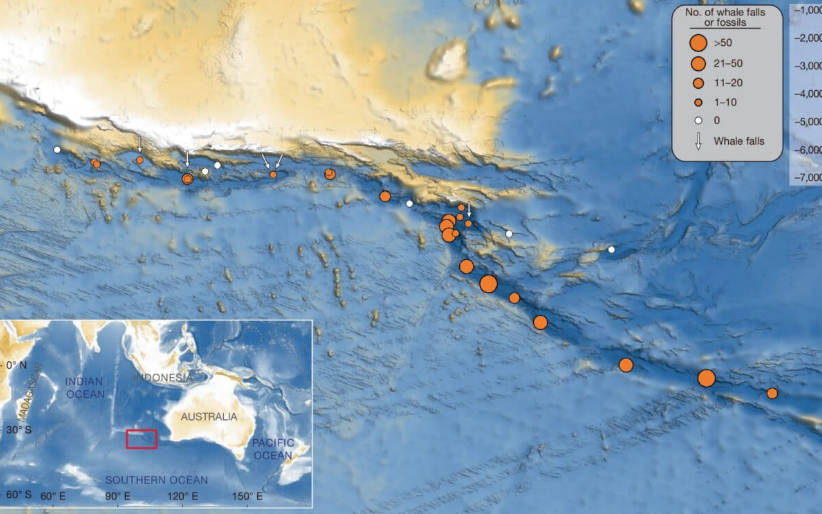
Thousands of meters beneath the pitch-black surface of the Indian Ocean,
marine scientists onboard a high-tech research vessel stumbled upon a scene straight out of a scientific legend.
Resting on the muddy ocean floor near remote oceanic islands, researchers uncovered a massive deep-sea graveyard packed with fossilized teeth, jaw fragments, and ear bones belonging to ancient sea giants.
Dating back over 5 million years to the Miocene and Pliocene epochs, this underwater bone bed contains the remains of prehistoric creatures alongside modern species that still roam our oceans today.
A Window into Prehistoric Waters
Oceanographers mapping the abyssal plain pulled up hundreds of fossilized ear bones (periotics) in a single dredge haul—a find so extraordinarily rare that marine paleontologists called it a once-in-a-career discovery.
What triggered such a massive accumulation of marine life in this single underwater location?
Part 2 of 4
Extinct Apex Predators and Ancient Giants
Among the whale bones, researchers identified fossilized teeth from ancestors of the legendary Megalodon.
Palaeontological Treasures in the Abyss
As marine paleontologists examined the dredged specimens, they quickly realized they weren't just looking at ordinary whale bones.
The seabed sample contained a startling mixture of extinct predatory whales, ancestral baleen species, and giant prehistoric sharks, including the terrifying ancestor of the Megalodon (Otodus megalodon).
"Finding ancient extinct species resting beside modern cetaceans in the exact same oceanic stratum reveals millions of years of evolutionary history layered in one spot."
Why Are Ear Bones So Important?
In deep ocean environments, most soft bones decay or dissolve due to water pressure and chemical corrosion. However, whale ear bones are incredibly dense and heavy, allowing them to mineralize and fossilize over millions of years.
Key Features of the Abyssal Fossil Find:
1.5-Million-Year Span: Covers eras when earth's oceans were significantly warmer and sea levels higher.
2.Predator Presence: Serrated Megalodon teeth found alongside bite-marked whale vertebrae.
3.Evolutionary Bridge: Connects primitive predatory baleen whales to modern filter-feeding leviathans.
Part 3 of 4
Why Did So Many Whales Die in One Place?
Powerful underwater currents and nutrient upwellings created a biological focal point over millennia.
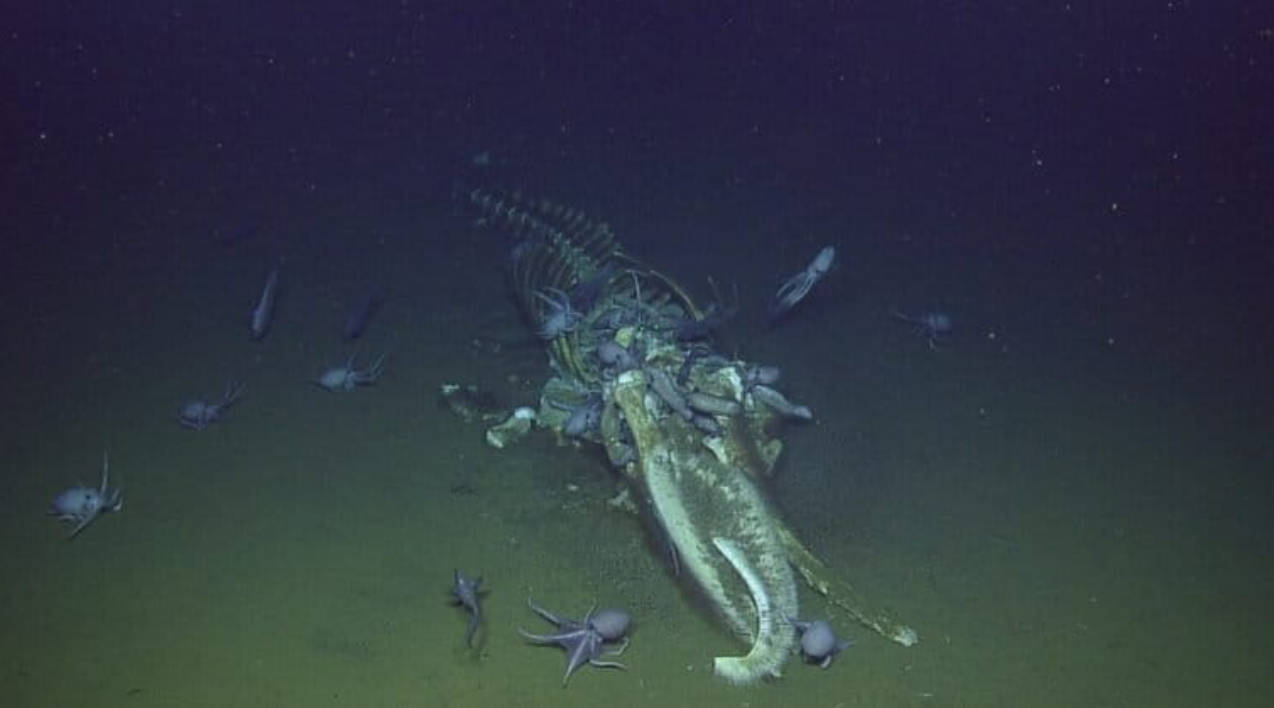
The Science of the Deep-Sea "Whale Fall"
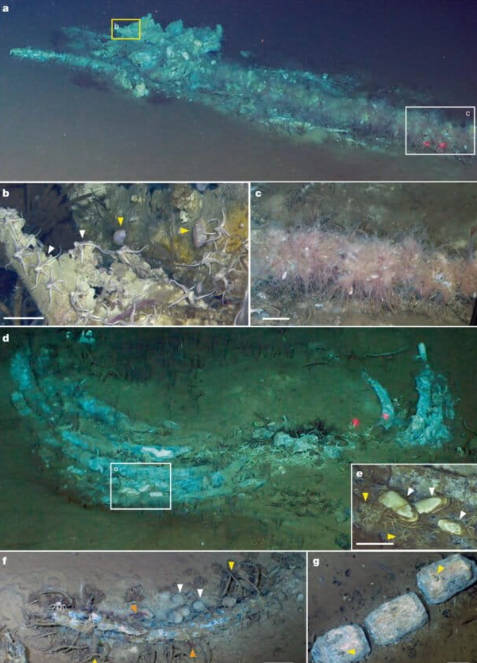
When a whale dies today, its massive carcass sinks to the sea floor in an event known as a whale fall. This creates an entire localized ecosystem that feeds specialized deep-sea organisms for decades.
However, finding dozens of fossilized species concentrated in a single geographic zone suggests something far grander was occurring millions of years ago.
Primary Oceanographic Hypothesis
An Ancient Super-Feeding Route
Scientists hypothesize that underwater sea mountains (seamounts) created massive nutrient upwellings, attracting vast schools of fish, squid, whales, and apex predators for millions of years.
Over millions of generations, marine creatures fed, lived, and naturally died above this ocean hotspot, slowly dropping their bones into the sediment below to form a dense fossil graveyard.
Part 4 of 4
What the Underwater Graveyard Teaches Us
Scientific Significance
Unlocking Earth's Past Climate Shifts
By analyzing the isotopic composition of these ancient whale teeth and bones, oceanographers can reconstruct ocean temperatures and nutrient levels from 5 million years ago.
This discovery proves that even in our modern era, less than 20% of the ocean floor has been mapped in high detail. The mysterious depths beneath the Indian Ocean continue to hold secrets about our planet's past.
Nature's Living Time Capsule
The 5-million-year-old whale graveyard stands as a breathtaking reminder that the abyssal plains are natural archives preserving the history of ocean life across millennia.